Concerning to say the least.
The Most Concerning Things Homeowners Should Know About Their Tap Water in 2026
Tap water can meet legal standards and still contain issues like PFAS, lead, chlorine byproducts, hardness, and odor. Learn what to watch for.
The Most Concerning Things Homeowners Should Know About Their Tap Water in 2026
Most homeowners turn on the faucet every day without thinking twice. The water looks clear, it does not always smell bad, and it usually feels safe because it comes from a city or county water system.
But here is the truth: clear water does not automatically mean problem-free water.
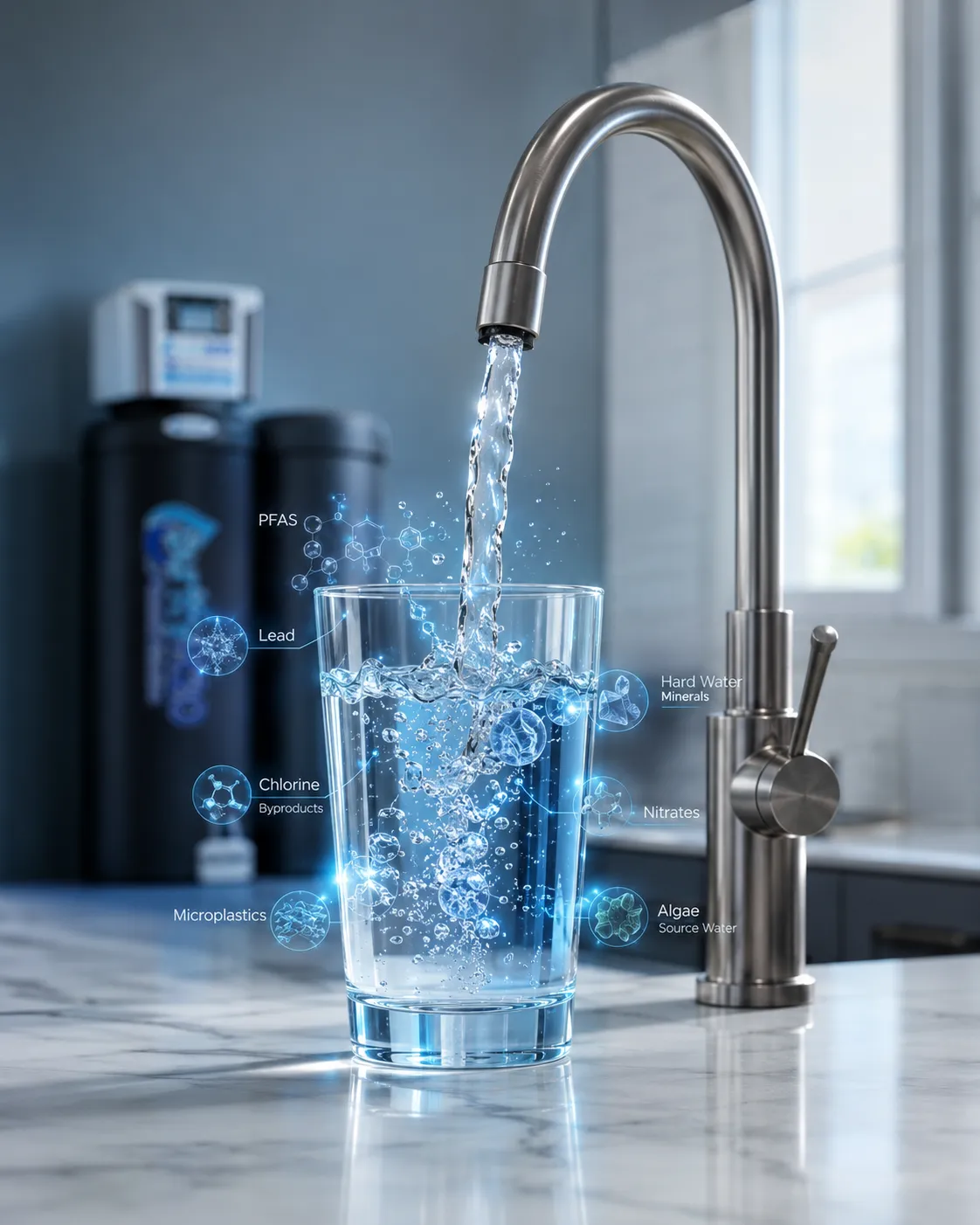
Across the country, water professionals, public health agencies, and environmental researchers are paying close attention to several major water-related concerns: PFAS “forever chemicals,” aging infrastructure, lead service lines, disinfection byproducts, nitrates, harmful algal blooms, and emerging contaminants like microplastics. EPA’s drinking water rules cover categories such as microorganisms, disinfectants, disinfection byproducts, inorganic chemicals, organic chemicals, PFAS, and radionuclides. (US EPA)
For Florida homeowners, especially families using municipal water or private wells, the best first step is simple: test the water before assuming what is in it.
1. PFAS: The “Forever Chemicals” Getting National Attention
PFAS stands for per- and polyfluoroalkyl substances. These chemicals have been used in products like nonstick cookware, stain-resistant materials, water-resistant clothing, food packaging, and firefighting foam. They are often called “forever chemicals” because they do not easily break down in the environment. (EWG)
EPA announced in 2025 that it would keep national drinking water limits for PFOA and PFOS, two of the most widely discussed PFAS chemicals. (US EPA)
The concern with PFAS is not just taste or smell. Many PFAS contaminants are invisible. You cannot look at a glass of water and know whether PFAS are present. That is why water testing and proper treatment conversations are becoming more important.
2. Aging Infrastructure and Lead Concerns
Another major issue is the condition of the pipes and infrastructure that deliver water to homes. The American Water Works Association’s 2026 State of the Water Industry report points to aging infrastructure, sustainable funding, and long-term water supply reliability as major pressure points for the water sector. (American Water Works Association)
Lead is especially concerning because it often enters water after treatment, through old service lines, plumbing, or fixtures. That means water can leave a treatment facility meeting standards, but still pick up contaminants before reaching the faucet.
This is why homeowners should pay attention to older homes, older neighborhoods, and any signs of outdated plumbing.
3. Chlorine, Taste, Odor, and Disinfection Byproducts
Municipal water systems often use disinfectants to control bacteria and microorganisms. That process plays an important public health role, but it can also create taste, smell, and byproduct concerns.
EPA regulates disinfectants and disinfection byproducts as part of its National Primary Drinking Water Regulations. (US EPA)
For homeowners, the most noticeable signs are usually:
A pool-like chlorine smell
A chemical taste
Dry skin after showering
Water that smells stronger at certain times of day
Ice, coffee, or cooking water that tastes “off”
A whole-home filtration system can help improve the everyday water experience by addressing common taste, odor, and conditioning concerns, depending on the home’s water test results.
4. Nitrates and Private Well Water
Nitrates are another concern, especially for homes near agricultural areas, septic systems, or private wells. Nitrates can enter water through fertilizer runoff, wastewater, and other environmental sources.
A UCSF environmental health fact sheet lists nitrates, pesticides, PFAS, harmful algal blooms, bacteria, and other contaminants as water concerns, with extra caution recommended for private well users. (Western States PEHSU)
Private wells are not treated or monitored the same way city water is. That means homeowners with wells carry more responsibility for routine testing.
For well water homes, testing matters because the problem could be hardness, iron, sulfur odor, bacteria, nitrates, or a combination of issues.
5. Harmful Algal Blooms and Source Water Quality
Harmful algal blooms happen when algae or cyanobacteria grow rapidly in water. The CDC says harmful algal blooms can harm people, animals, and the environment. The CDC also advises people to stay out of water that looks discolored, has scum, or smells bad. (CDC)
EPA’s harmful algal bloom drinking water fact sheet explains that warm water with high nutrient levels can contribute to blooms, and some blooms can produce cyanotoxins that may pose health risks. (US EPA)
For homeowners, this matters because source water quality can affect what treatment plants must deal with before water ever reaches the home.
6. Microplastics: The Emerging Concern
Microplastics are becoming a bigger part of the water conversation. In 2026, EPA proposed adding microplastics to a drinking water contaminant list to support more research into their health impacts. (Waste Dive)
This is still an emerging area. The main takeaway for homeowners is that water quality concerns are changing. The water industry is not only focused on old problems like rust, hardness, and chlorine. It is now also looking at newer contaminants that were not part of everyday household conversations years ago.
7. Hard Water: The Problem Homeowners Actually See Every Day
Not every water issue is invisible.
Hard water is one of the most common problems homeowners notice because it shows up around the house:
White scale on faucets
Spots on dishes and glassware
Dry-feeling skin and hair
Soap that does not lather well
Buildup around showerheads
Shorter appliance life
Water heater strain
Hard water is not always treated like an emergency, but it can become an expensive comfort and maintenance issue over time.
This is where a properly designed whole-home system can make a major difference in daily life.
Why a Free In-Home Water Test Matters
The biggest mistake homeowners make is guessing.
Some people assume their water is fine because it is clear. Others assume they need the biggest system available because the water smells bad. Both approaches can lead to bad decisions.
A proper in-home water test helps identify what is actually going on so the solution can match the problem.
At Purity H2O, the goal is not to scare homeowners. The goal is to help families understand their water clearly, then explain what options make sense.
How the Purity H2O Advanced Filtration System Helps
The Purity H2O Advanced Filtration System is designed around whole-home water improvement. The system uses a Fusion 2 / Clack-style control valve head and layered media designed to support filtration, conditioning, taste and odor improvement, hardness control, and water flow distribution.
Inside the system, the media stack may include:
KDF-55 Media
Supports filtration performance and may help with chlorine-related concerns depending on the water conditions.
Catalytic Activated Carbon
Helps reduce chlorine taste and odor, improving the smell and taste of water throughout the home.
C100 10% Supercharged Resin
Helps address hardness minerals that contribute to scale, spotting, and buildup.
C300 16% Resin
A specialty resin layer included to support advanced conditioning performance.
Garnet Quartz Bedding
A heavy support layer that helps stabilize the media bed and support proper water flow.
The right setup starts with the test, because every home’s water is different.
Final Thought: Don’t Wait Until the Water Looks Bad
Some water problems are obvious. Others are invisible.
The most concerning water issues today are not always the ones you can see, smell, or taste. That is why homeowners should take water quality seriously before there is a major problem.
A free in-home water test gives you answers. It helps you understand what is in your water, what your home needs, and what options are available.
Cleaner water starts with clear information.
Schedule your free in-home water test with Purity H2O today.